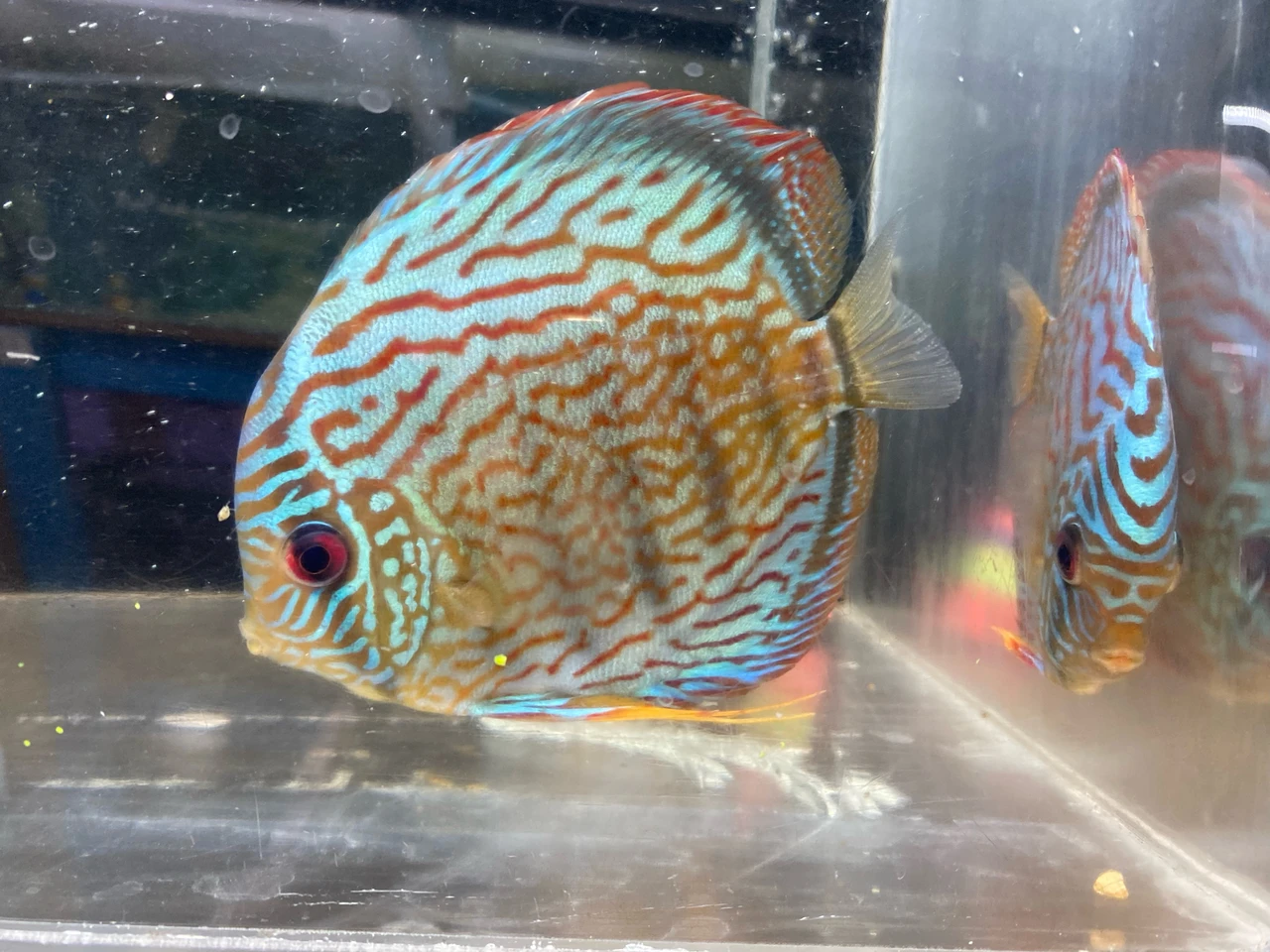
Symphysodon spp. — farm strain
Red Turquoise Discus
The most popular strain in the hobby — turquoise base streaked with red, farmed by the millions and available at every skill level.
Tank: 55g+ min • pH: 6.0–7.4
Unlike most cichlid genera, discus isn't really a "pick your species" hobby — nearly everything in the trade descends from a handful of wild populations that selective breeding has pushed in wildly different directions. Below are the strains and wild types worth knowing, in the order most keepers actually encounter them.
The most popular strain in the hobby — turquoise base streaked with red, farmed by the millions and available at every skill level.
Tank: 55g+ min • pH: 6.0–7.4

Solid, near-metallic blue from head to tail. One of the cleanest "showpiece" solid-color strains and a benchmark for quality.
Tank: 55g+ min • pH: 6.0–7.4

Pale, almost translucent body with red eyes and freckled red spotting. Polarizing, unmistakable, and a strong seller.
Tank: 55g+ min • pH: 6.0–7.4

Fine, netted body patterning that looks etched rather than painted. One of the more distinctive patterned lines.
Tank: 55g+ min • pH: 6.0–7.4
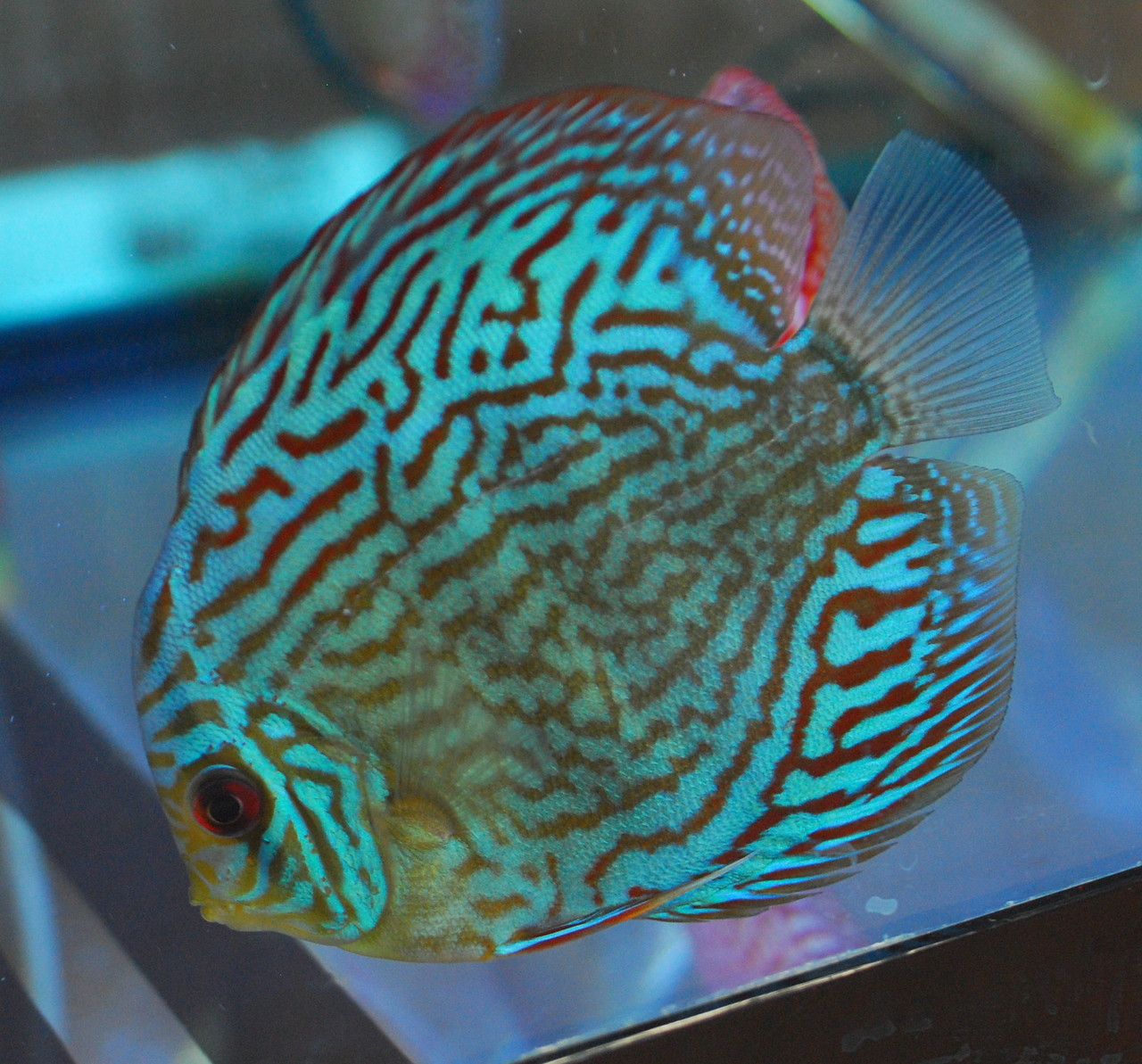
The same fine netted pattern as Snakeskin, expressed over a cool blue base instead of red or gold. One of the store's most popular strains.
Tank: 55g+ min • pH: 6.0–7.2
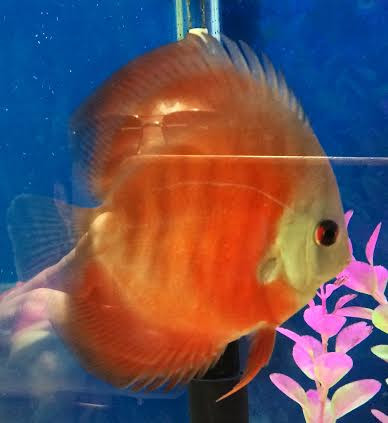
Deep, solid red across the entire body with almost no secondary pattern. One of the most demanded solid-color strains.
Tank: 55g+ min • pH: 6.0–7.4
A softer, pinker cousin of Marlboro Red within the same solid-red breeding tradition.
Tank: 55g+ min • pH: 6.0–7.2
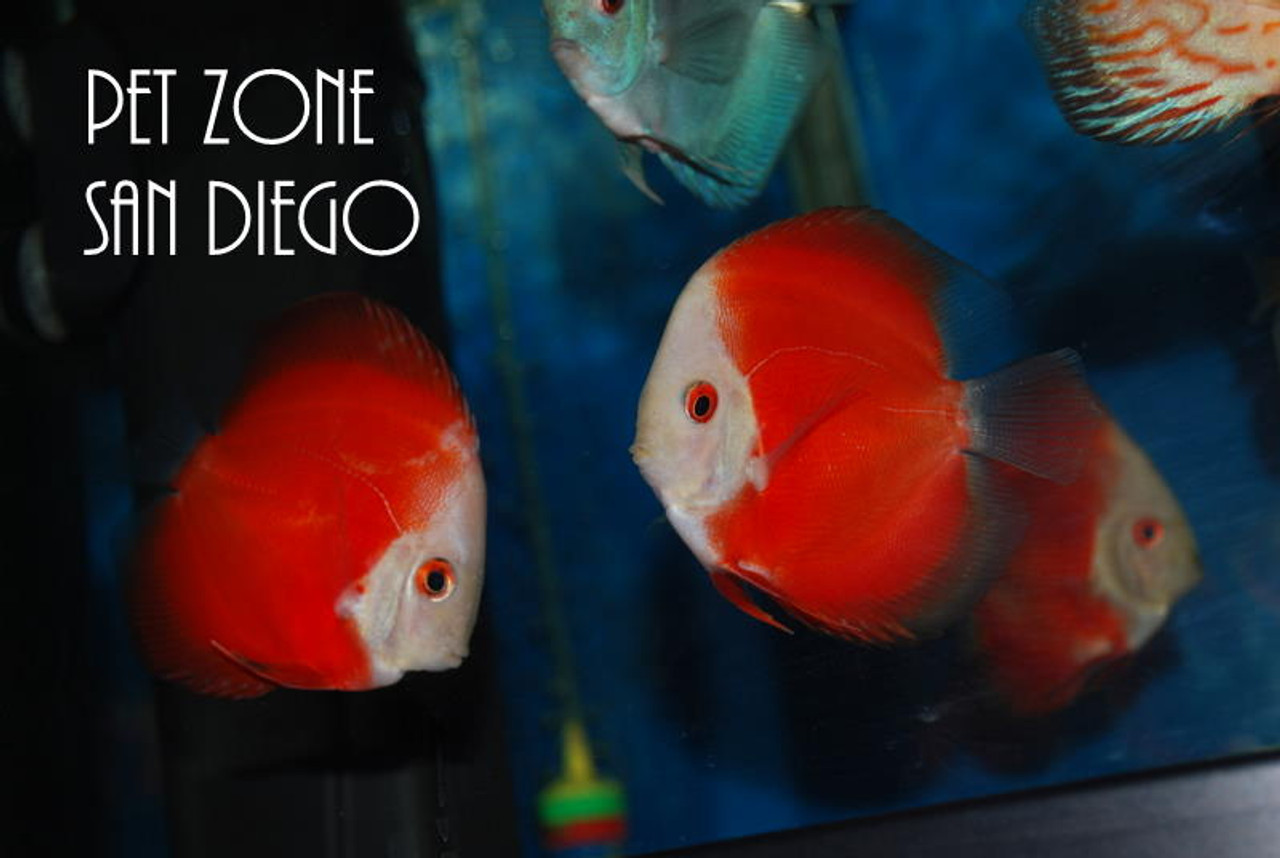
A warmer, brighter orange-red solid strain — part of the Melon family, close cousin to Marlboro Red.
Tank: 55g+ min • pH: 6.0–7.2

A broken, tiled body pattern that reads almost geometric. Less common at retail, popular with pattern collectors.
Tank: 55g+ min • pH: 6.0–7.4
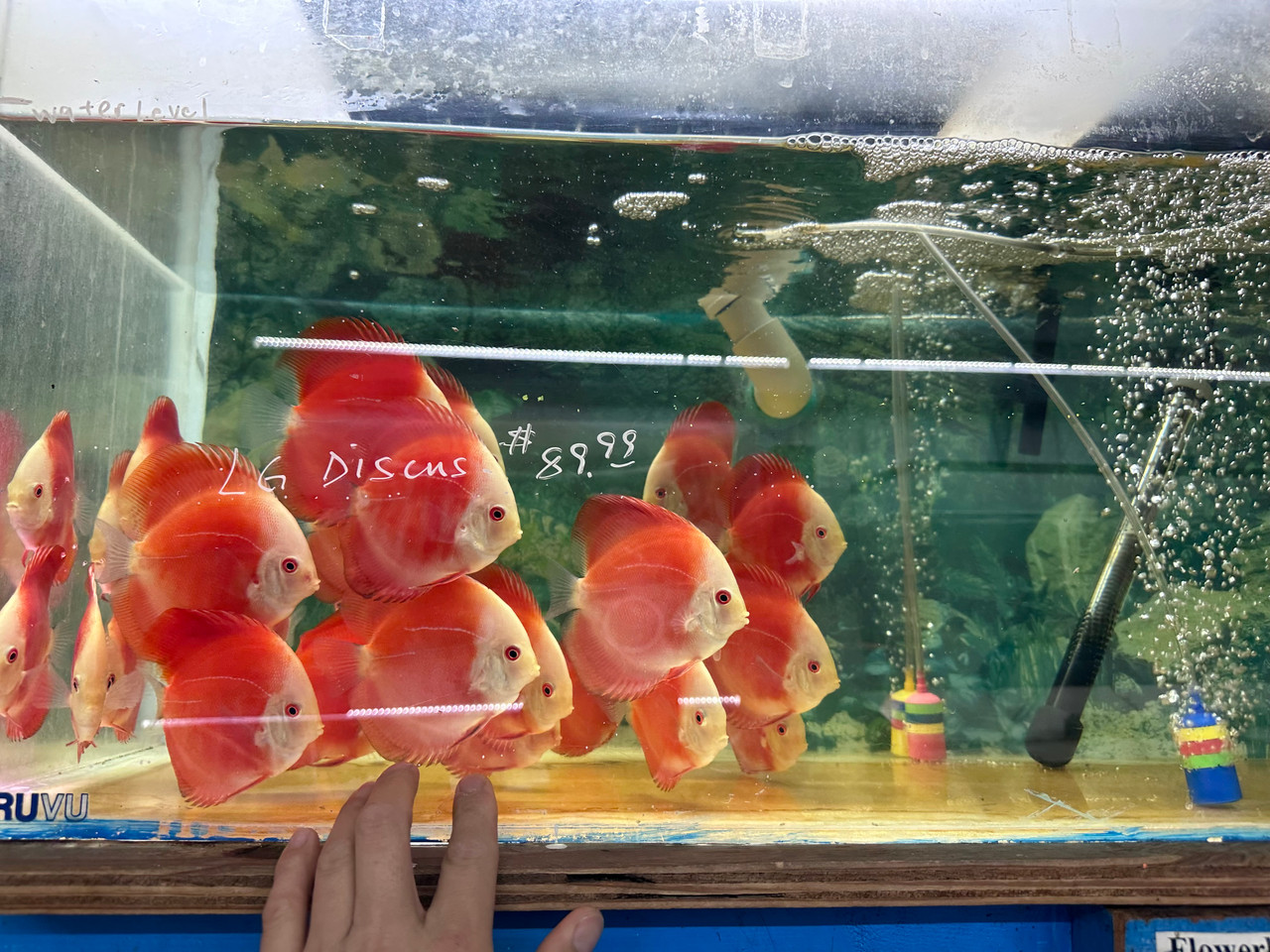
Vivid red facial blush fading to a paler body, named for the apple variety it resembles.
Tank: 55g+ min • pH: 6.0–7.2

Glowing solid orange-red, with Yellow Melon and Red Melon color forms. Close cousin to Marlboro Red.
Tank: 55g+ min • pH: 6.0–7.2

Solid pearl-white with normal dark eyes — the non-albino counterpart to the Albino strain.
Tank: 55g+ min • pH: 6.0–7.2
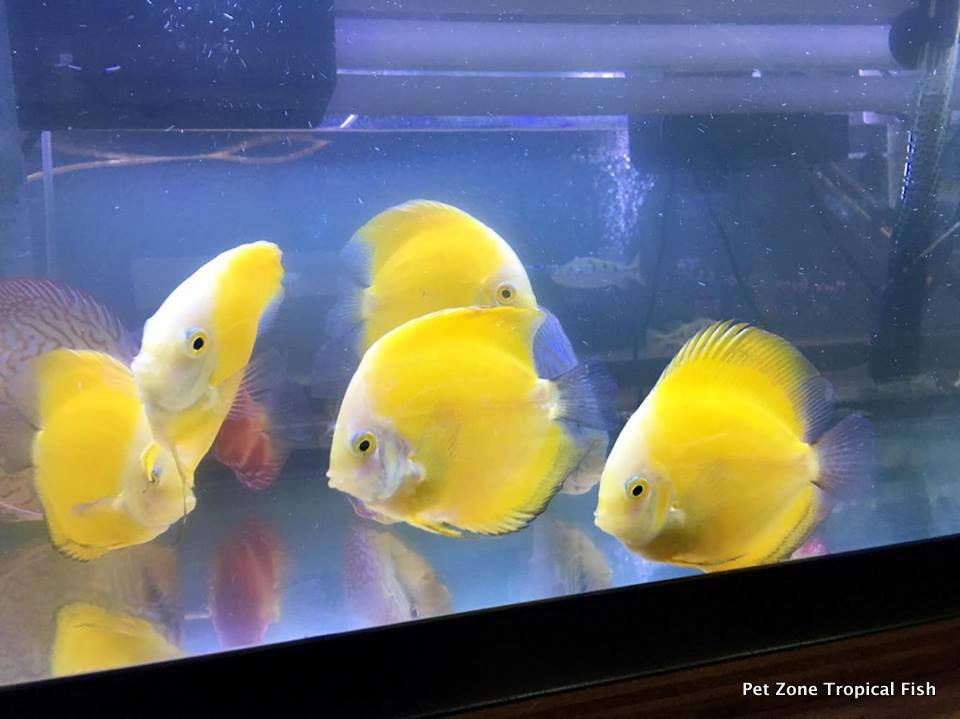
Bright, clean yellow concentrated toward the face, closely related to Yellow Pigeon color forms.
Tank: 55g+ min • pH: 6.0–7.2

Vivid yellow built on the same pigeon pattern gene as Pigeon Blood. Also sold as Yellow Checkerboard.
Tank: 55g+ min • pH: 6.0–7.2
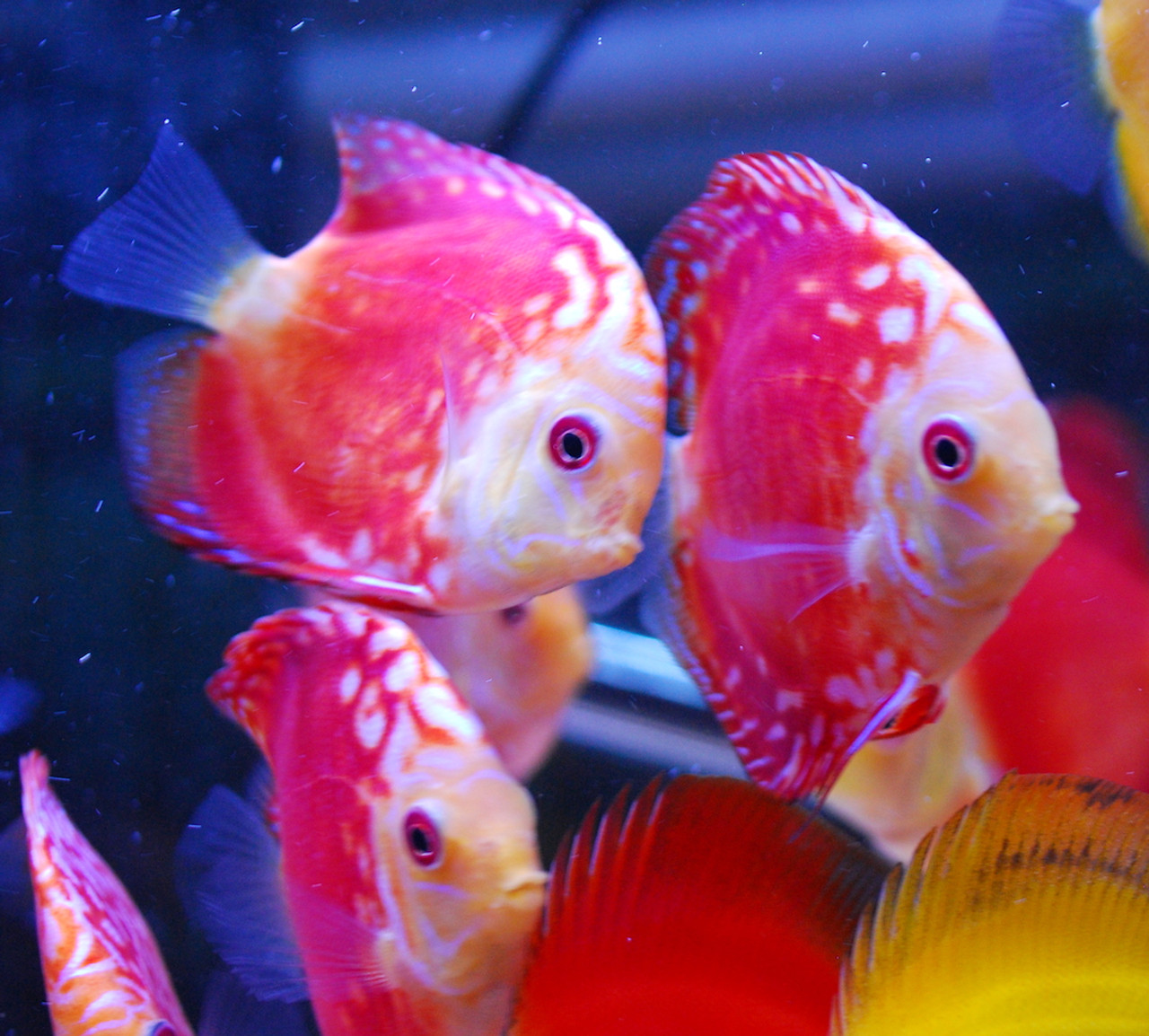
A hybrid strain crossing Melon Red's warm saturation onto Pigeon Blood's pale, translucent base.
Tank: 55g+ min • pH: 6.0–7.2

Brilliant near-solid electric blue with red dorsal accents — distinct from the heavily red-patterned Red Turquoise.
Tank: 55g+ min • pH: 6.0–7.2
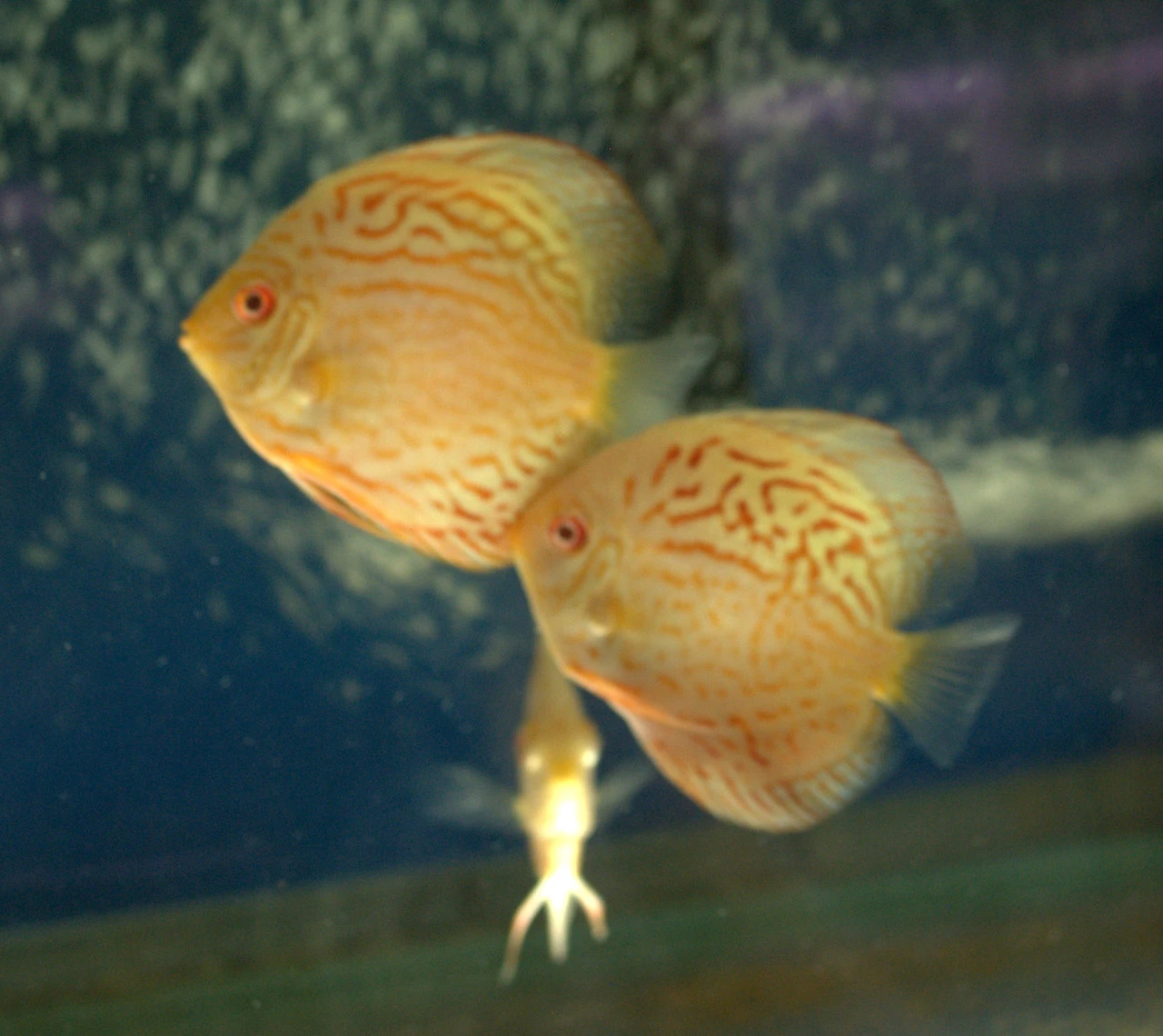
A recessive trait expressed across several strains — pale, translucent body and telltale red or pink eyes.
Tank: 55g+ min • pH: 6.0–7.2

Vivid, saturated solid orange-gold, with normal dark eyes distinguishing it from the pastel albino form.
Tank: 55g+ min • pH: 6.0–7.2
The original — the only discus with a truly diagnostic dark third bar. Rio Negro blackwater specialist, still mostly wild-caught.
The Symphysodon aequifasciatus/haraldi complex that founded every farm strain above. Subtle, hardy, and increasingly rare in the trade.
First discus? Start with Red Turquoise. It's the most widely farmed, most forgiving of the color strains, and gives you a full sense of what discus keeping actually involves before you spend more on rarer stock.
Building a show tank? Blue Diamond and Marlboro Red are the benchmark solid-color strains — judged hardest on evenness and saturation.
Chasing something rarer? Wild-type Heckel and the Blue/Brown/Green wild complex are a different hobby entirely — smaller, subtler, far less forgiving of poor water, and increasingly hard to source responsibly.
Two "Red Turquoise" discus from different farms can differ enormously in body depth, finnage, and hardiness. Asian farm lines (Malaysia, Thailand, Singapore) dominate the affordable end of the market and are generally the most forgiving for beginners. German and other European lines are typically pricier, more selectively bred for specific standards, and often the source of genuinely new strains. We'll flag lineage differences throughout these guides where they change how you should keep the fish.
Read Red Turquoise Discus first. Then jump into care fundamentals for the water chemistry and tank setup pieces — they matter more with discus than with almost any other freshwater fish.
Red Turquoise, by a wide margin — it's farmed by the millions across Southeast Asia, making it the most affordable and consistently available strain at every skill level.
Red Turquoise is the usual recommendation — the most widely farmed and most forgiving of the color strains. All discus share the same core water and feeding demands regardless of strain, so "easy" is relative within a genuinely intermediate-to-advanced hobby.
Wild-caught Heckel Discus and the wild Blue, Brown & Green complex are the rarest and hardest to source responsibly — smaller, subtler fish from specific Amazon blackwater regions rather than farm-bred color strains.
Yes — every farm strain descends from the wild Symphysodon aequifasciatus/haraldi complex, but wild fish are subtler in color and far less forgiving of poor water than modern farm lines bred for tolerance.