Blue Snakeskin Discus
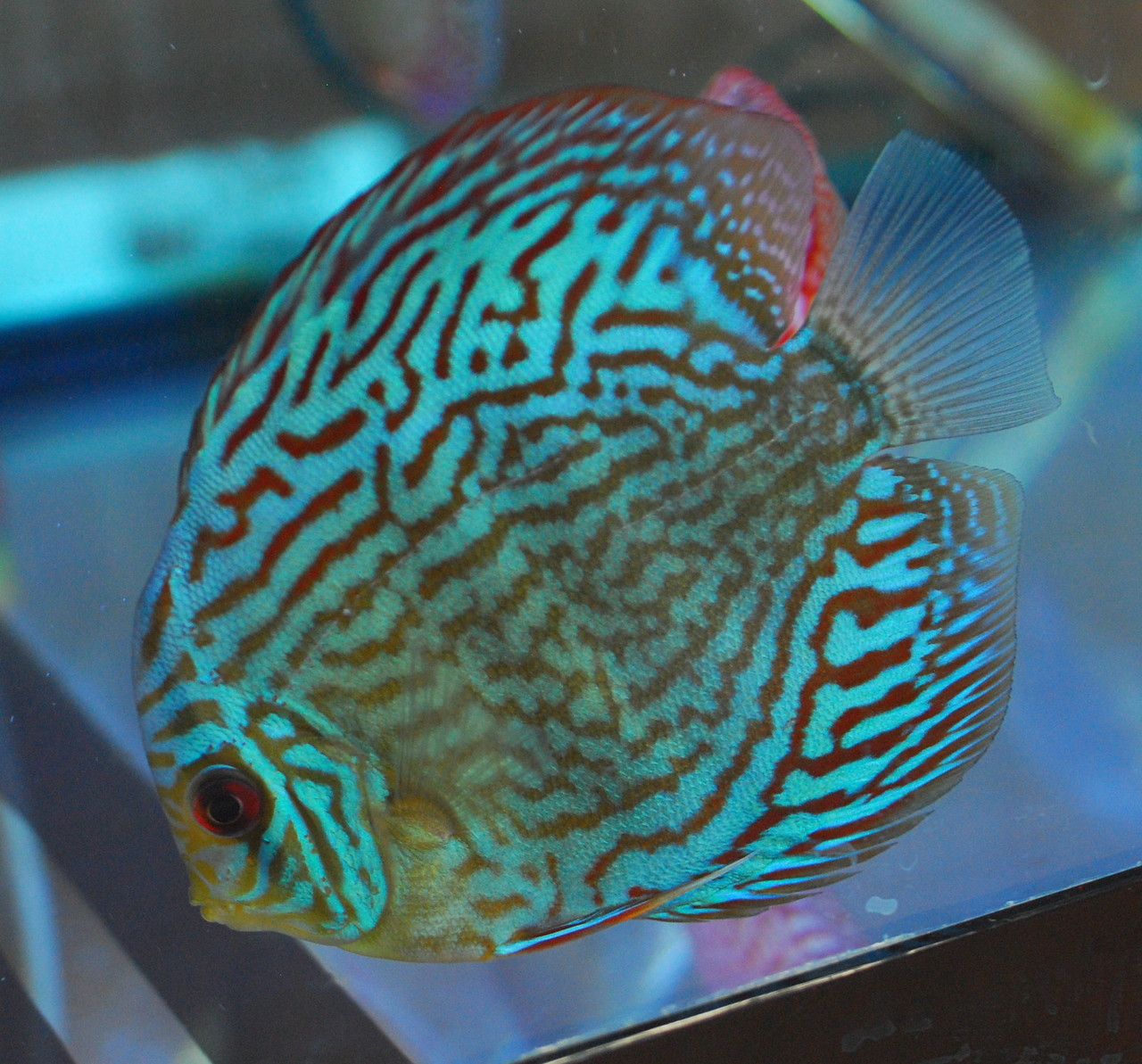
- Size: 6–8 inches (15–20 cm) as adults
- Tank: 55 gallons minimum for a group, tall (20"+ height)
- pH: 6.0–7.2
- Temperature: 82–86°F (28–30°C)
- Hardness: Soft to moderate (2–8 dGH)
- Temperament: Peaceful, shoaling
- Difficulty: Intermediate
Overview
Blue Snakeskin is one of Pet Zone's most popular strains, and it's easy to see why — it pairs the fine, dense, wavy-line "snakeskin" pattern gene with a cool blue base color instead of the red or gold tones the pattern is more often crossed onto. See the Snakeskin guide for the full background on the pattern gene itself; this page covers what's specific to the blue color form.
As with any patterned discus, body depth and finnage track whatever base strain the snakeskin gene was crossed onto, so quality can vary noticeably between breeders and farm lines. Even lighting shows the fine netting best — heavy blue-spectrum aquascape lighting can actually wash out the very pattern it's meant to highlight, since it flattens contrast against the blue base.
Tank Setup & Water
No different from other discus strains — see the Red Turquoise guide for the complete tank, substrate, and water chemistry breakdown (55 gallons minimum, tall tank, pH 6.0–7.2, 82–86°F). A dark background helps the blue base and fine netting both read more clearly than a bright or busy background.
Feeding
Standard discus diet — quality pellets as a staple with beef heart mix, bloodworms, and live foods in rotation for growth and conditioning, following the feeding guide. No pattern- or color-specific dietary needs beyond what any discus strain requires.
Temperament & Compatibility
Standard discus shoaling behavior — peaceful with tankmates, group-dependent for security and reduced intraspecific aggression. Its cool blue tone makes a nice counterpoint to warmer strains like Marlboro Red or Melon Red in a mixed display.
Breeding Notes
Standard pairing, spawning, and parental slime-feeding — see the breeding guide for the full walkthrough. Because the snakeskin pattern is crossed onto a specific base color rather than fixed as a single pure line, fry from a home pairing can show a spread of both pattern density and base-color intensity — some closer to the parents, some further off.
Common Issues
No pattern- or color-specific health concerns — Blue Snakeskin is subject to the same general discus issues (hole-in-the-head, stunting, stress-related dulling) covered in common diseases. A washed-out or muddy-looking pattern is more often a lighting choice than a health signal; see the note above on lighting.
Where to Get Quality Fish
Look for crisp, well-defined netting against a clean, even blue base rather than a muddy or faded look, and ask what base strain the pattern was crossed onto if color consistency matters to you. Pet Zone SD stocks Blue Snakeskin as one of its most popular strains. See our sourcing guide for more.
Cost: Typically $20–40 for quality juveniles, in line with other common farm strains.
Final Thoughts
Blue Snakeskin is a strong pick for a keeper who wants the same low-difficulty care as classic Snakeskin with a cooler, more striking color palette — one of the more consistently popular strains for exactly that reason.
Blue Snakeskin FAQ
Why is Blue Snakeskin so popular?
It pairs the fine, dense netting of the Snakeskin pattern with a cool blue base that most other snakeskin color forms don't offer, giving a striking, distinct look while keeping the same easy care as any other discus strain.
Does lighting affect how Blue Snakeskin's pattern looks?
Yes — even, non-glaring lighting shows the fine netting best. Heavy blue-spectrum aquascape lighting can actually wash out the pattern it's meant to highlight, since it flattens contrast against the already-blue base.
Is Blue Snakeskin a good beginner discus?
Yes — care requirements are identical to any other discus strain and no harder than the widely recommended Red Turquoise. It's a solid choice for a first or second discus if the blue-and-netting look appeals to you.