Melon Red Discus
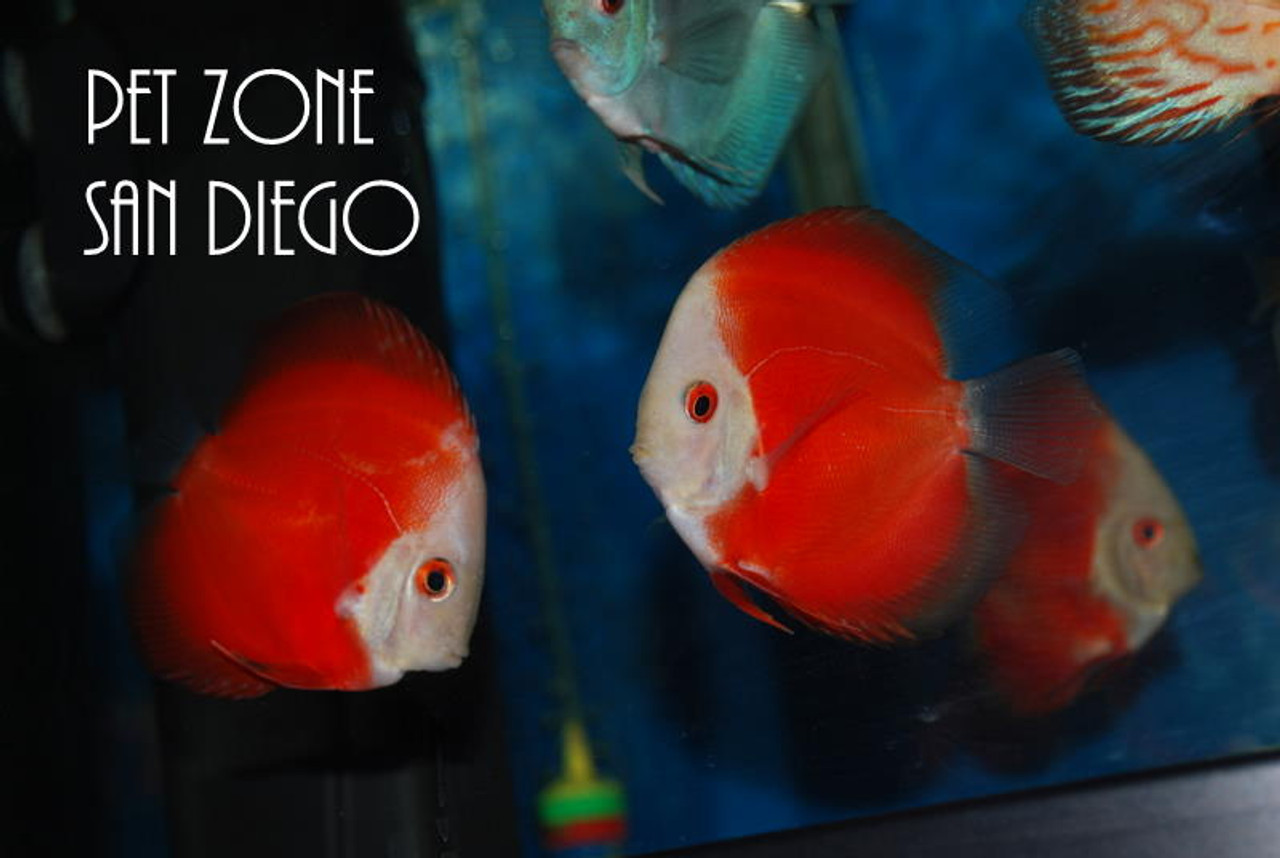
- Size: 6–8 inches (15–20 cm) as adults
- Tank: 55 gallons minimum for a group, tall (20"+ height)
- pH: 6.0–7.2
- Temperature: 82–86°F (28–30°C)
- Hardness: Soft to moderate (2–8 dGH)
- Temperament: Peaceful, shoaling
- Difficulty: Intermediate to advanced — solid color shows stress and poor water fastest
Overview
Melon Red is the solid-red member of the broader "Melon" strain family, which also includes the paler, sunnier Yellow Melon. Where Yellow Melon leans toward glowing yellow-orange, Melon Red pushes further into a warm, saturated orange-red — closer to the fruit that gives the family its name than to Marlboro Red's deeper brick tone. It's often sold and discussed alongside Marlboro Red and Rose Red as one of the three benchmark solid-red options, though genetically it belongs to the Melon lineage rather than the Marlboro line.
As with any solid-color strain, evenness and saturation — not pattern — are what separates a great specimen from a mediocre one, and both traits fade quickly under poor water or a thin diet.
Tank Setup & Water
No different from other discus strains — see the Red Turquoise guide for the complete tank, substrate, and water chemistry breakdown (55 gallons minimum, tall tank, pH 6.0–7.2, 82–86°F). Bare-bottom setups are common among keepers chasing peak color, and stable, low-nitrate water holds saturation better over time than a tank that's merely adequate.
Feeding
Standard discus diet — quality pellets as a staple, with beef heart mix and carotenoid-rich foods in rotation to help intensify the red-orange tone, following the same schedule as the feeding guide. As with any color-driven strain, diet supports what genetics and water quality already provide.
Temperament & Compatibility
Standard discus shoaling behavior — peaceful, group-dependent, happiest in six or more, with no special compatibility concerns beyond the usual discus tankmate guidance. Its warm orange-red tone makes a strong contrast against cooler-toned strains like Blue Diamond or Blue Turquoise in a mixed-strain display.
Breeding Notes
Standard pairing, spawning, and parental slime-feeding — see the breeding guide for the full walkthrough. Solid-color genetics generally breed true, but a home-bred spawn still benefits from culling toward the most even, saturated fry across a couple of generations.
Common Issues
Like any solid-color strain, Melon Red dulls or patches visibly under poor water, thin diet, or chronic stress — a useful early-warning signal, since the fading shows up well before a patterned strain would reveal the same stress. Check water parameters and water-change frequency first; beyond color-specific fading, it's subject to the same general discus health issues covered in common diseases.
Where to Get Quality Fish
Look for a bright, uniform orange-red with no dulling or patchy fading, and clean, undamaged fins. Pet Zone SD stocks Melon Red and its Yellow Melon cousin when available. See our sourcing guide for more.
Cost: Typically $20–40 for quality juveniles, in line with other common solid-color farm strains.
Final Thoughts
Melon Red is an excellent pick for a keeper who wants a warmer, brighter red than Marlboro's deep saturation — same straightforward care, a genuinely vivid centerpiece fish.
Melon Red FAQ
Is Melon Red the same as Marlboro Red discus?
No, though they're often sold and discussed together. Melon Red belongs to the Melon strain lineage and runs warmer and more orange-toned; Marlboro Red is a separate line bred for deeper brick-red saturation. Both are solid-red strains cared for identically.
What's the difference between Melon Red and Yellow Melon discus?
Both are color forms of the same Melon strain family. Melon Red is pushed toward a saturated orange-red; Yellow Melon leans toward a brighter, sunnier yellow-orange. Care is identical for both.
How do you keep Melon Red discus color bright?
Consistent, stable, low-nitrate water and a varied diet with beef heart mix and carotenoid-rich foods support saturation, but genetics and water quality do most of the work — no supplement rescues a Melon Red kept in poor conditions.