Marlboro Red Discus
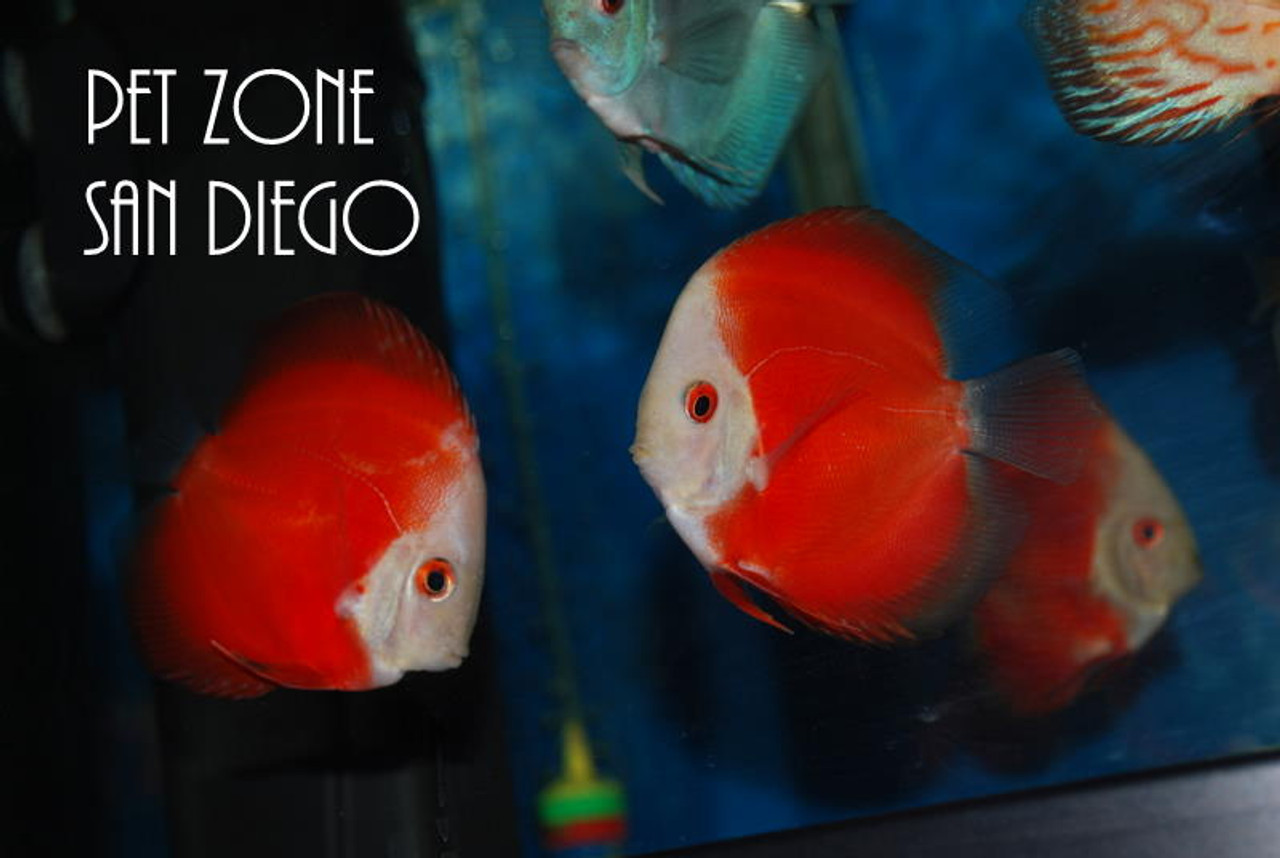
- Size: 6–8 inches (15–20 cm) as adults
- Tank: 55 gallons minimum for a group, tall (20"+ height)
- pH: 6.0–7.2
- Temperature: 82–86°F (28–30°C)
- Hardness: Soft to moderate (2–8 dGH)
- Temperament: Peaceful, shoaling
- Difficulty: Intermediate to advanced
Overview
Marlboro Red is the other benchmark solid-color strain alongside Blue Diamond — bred for deep, even red saturation across the entire body with essentially no secondary pattern. The name is hobbyist shorthand referencing the intensity of the red rather than any connection to the tobacco brand, and it's stuck for decades because it's simply the most recognizable name for this look.
Like Blue Diamond, this is a strain judged on evenness and saturation rather than pattern complexity, which means it's genuinely more sensitive to visible fading under poor water quality, weak diet, or chronic stress than a patterned strain would show. A dull, blotchy Marlboro Red is one of the clearer "something's wrong" signals in the discus hobby.
Related Solid-Red Cousins
Marlboro Red isn't the only solid-red option on the market — you'll also see it sold alongside two close cousins. Rose Red is a slightly softer, rosier take on the same solid-red project, often running a touch lighter and pinker than a true Marlboro's deep brick red. Melon Red leans the other direction, toward a warmer orange-red closer to the color of its namesake fruit, and is sometimes sold under the broader "Melon" strain name alongside yellow and orange-based Melon color forms. All three are cared for identically — the differences are cosmetic grading distinctions within the same solid-red breeding tradition, not separate husbandry categories.
Tank Setup & Water
Requirements track the same baseline as any discus — see the Red Turquoise guide for the full tank, substrate, and hardscape breakdown. A few things worth calling out for Marlboro Red specifically:
- Tank: Standard discus baseline — 55 gallons minimum for a growing group of four to six juveniles, tall (20"+) and moving toward 75–125 gallons as adults.
- Substrate: Bare-bottom is common among breeders and show keepers chasing peak color and condition, since it makes the water-quality discipline that supports red saturation easier to maintain.
- Water chemistry: Standard discus range — pH 6.0–7.2, 82–86°F, 2–8 dGH — but keepers targeting show-quality red tend to run especially stable, low-nitrate water, since nitrate creep is one of the more common causes of a Marlboro Red looking dull rather than deep.
- Lighting & background: Warmer-spectrum lighting and a dark background make deep red pop noticeably more than cool blue-spectrum aquascape lighting, which tends to mute red tones.
Feeding
Standard discus diet applies, with many keepers leaning specifically on beef heart mix and carotenoid-rich foods to support red saturation, alongside a high-quality discus pellet as the everyday staple — the same core diet covered in the feeding guide. As with any color-driven strain, diet supports what genetics and clean water already provide; no feeding regimen turns a genetically pale line into a deep Marlboro red.
Temperament & Compatibility
Identical shoaling behavior to other discus strains — peaceful, group-dependent, happiest in six or more, with no special compatibility concerns beyond standard discus tankmate guidance (cardinal tetras, corydoras, rummynose tetras, otocinclus). A deep red Marlboro alongside a Blue Diamond and a patterned strain like Red Turquoise makes for one of the more visually dramatic mixed-strain display tanks in the hobby.
Breeding Notes
Standard discus pairing, spawning, and parental slime-feeding apply unchanged — see the breeding guide for the full walkthrough. Solid-color genetics breed comparatively true compared to more variable patterned or pigeon-derived strains, but achieving show-quality, even saturation across an entire spawn still takes selective culling over generations; expect some fry in a home-bred spawn to come in lighter or slightly patchy even from two excellent parents.
Common Issues
Fading to a Dull Brick or Orange-Red
Cause: Usually nitrate creep, an aging diet lacking carotenoid-rich foods, or general stress — the same visibility that makes Marlboro Red striking when healthy also makes decline obvious fast.
Fix: Step up water change frequency, check nitrate levels specifically (aim under 10–20 ppm), and rotate in beef heart mix or color-enhancing foods. Color typically recovers over one to two weeks once the underlying cause is fixed.
Beyond color-specific fading, Marlboro Red is subject to the same general discus health issues covered in common diseases.
Where to Get Quality Fish
Look for deep, uniform red with no patchiness, pale patches, or orange-shift, and clean, undamaged fins. Pet Zone SD stocks Marlboro Red and its close cousins when available. See our sourcing guide for general buying guidance — this is a strain where source quality shows up fast, both at purchase and over the following months.
Cost: Typically $20–40 for quality juveniles, in line with other common farm strains, with deep, evenly saturated adults commanding a premium.
Final Thoughts
Marlboro Red is a striking centerpiece strain best suited to a keeper who already has discus water-quality discipline dialed in — the payoff for consistent care is genuinely one of the most vivid solid-color fish in the freshwater hobby. If you're drawn to the look but new to discus, spend a cycle with a hardier patterned strain like Red Turquoise first, then move up to Marlboro Red once your maintenance routine is second nature.
Marlboro Red FAQ
Why is it called Marlboro Red discus?
It's hobbyist shorthand referencing the intensity of the red color, not a connection to the tobacco brand. The name has stuck for decades simply because it's the most recognizable label for this deep solid-red look.
What's the difference between Marlboro Red, Rose Red, and Melon Red discus?
All three are solid-red strains cared for identically. Marlboro Red is the deepest, brick-red benchmark; Rose Red runs softer and pinker; Melon Red leans warmer and more orange-toned. The differences are cosmetic grading distinctions within the same breeding tradition, not separate husbandry categories.
How do you keep Marlboro Red discus color saturated?
Consistent, clean, low-nitrate water and a varied diet including beef heart mix and carotenoid-rich foods support red saturation, but genetics and water quality do most of the work — no supplement fixes a Marlboro Red kept in poor conditions.
Is Marlboro Red a good beginner discus?
It's a better second or third discus than a first one. Care requirements match any discus, but as a solid-color strain it shows stress, poor diet, and declining water quality faster and more visibly than a patterned strain like Red Turquoise.