Fuji Apple Discus
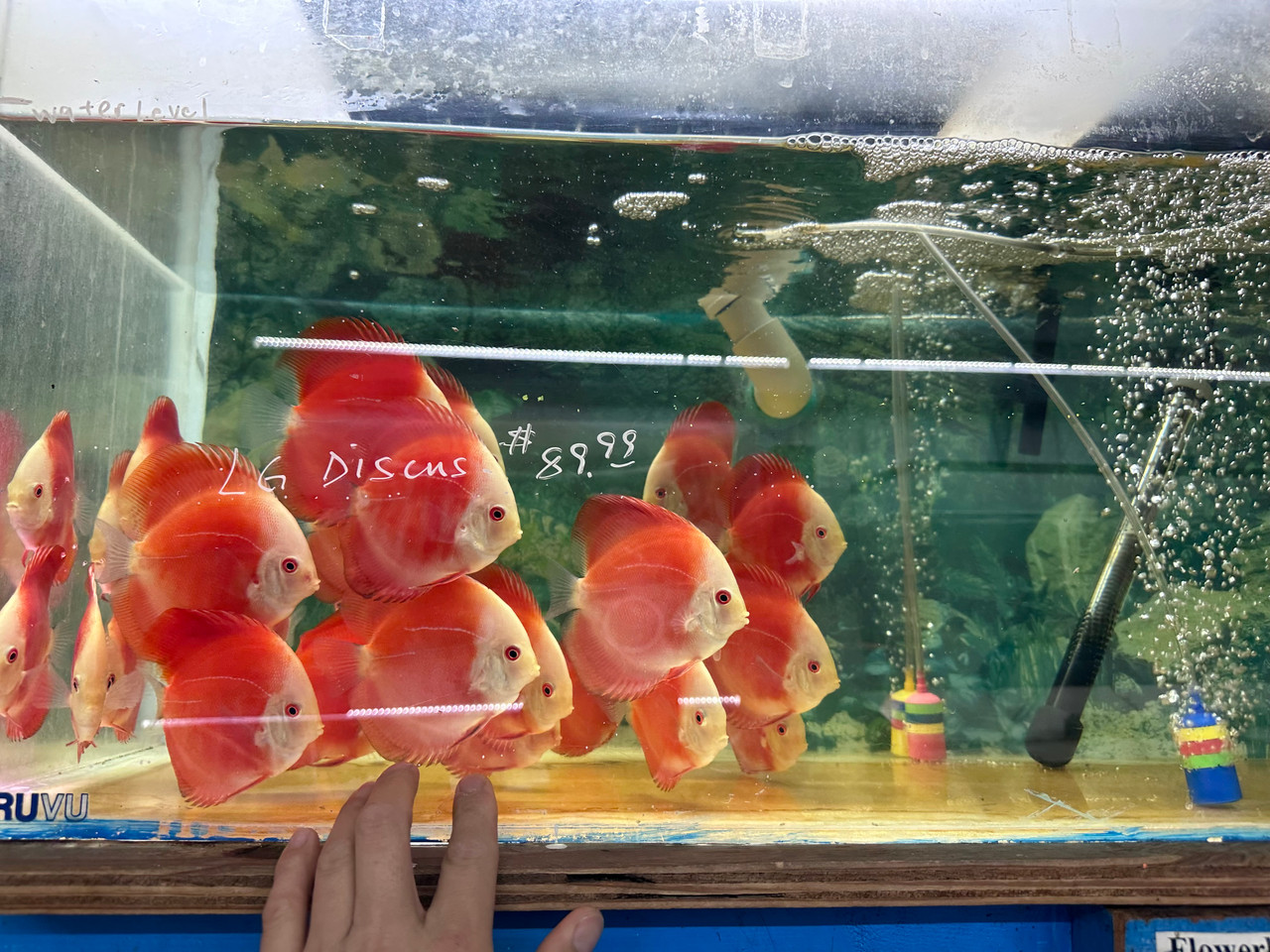
- Size: 6–8 inches (15–20 cm) as adults
- Tank: 55 gallons minimum for a group, tall (20"+ height)
- pH: 6.0–7.2
- Temperature: 82–86°F (28–30°C)
- Hardness: Soft to moderate (2–8 dGH)
- Temperament: Peaceful, shoaling
- Difficulty: Intermediate
Overview
Fuji Apple takes its name from the apple variety it resembles — a pale, blushing body with a vivid red-orange wash concentrated around the face and forward body, fading out toward a lighter rear half and fins. It's a farm-developed strain that sits stylistically between the solid-color strains (Blue Diamond, Marlboro Red) and the pattern strains (Checkerboard, Snakeskin) — there's real color intensity here, but it's a gradient wash rather than a hard-edged pattern.
The strain reads as approachable and a little softer than the high-contrast pattern strains, which has made it a popular pick for keepers who want vivid color without the stark red-and-white lattice look of a Checkerboard. Grading focuses on how clean and saturated the facial blush is, and how evenly it fades into the paler body — patchy or blotchy transitions are considered lower quality.
Tank Setup & Water
- Tank: Standard discus baseline — tall, 55 gallons minimum for a growing group of four to six, more for mature adults.
- Substrate: Either bare-bottom or planted works well; the blush-and-fade coloring shows nicely against a darker planted background.
- Water chemistry: Standard discus range — 6.0–7.2 pH, 82–86°F.
Feeding
Standard discus diet — quality pellets as the staple, with beef heart mix, bloodworms, and other color-supporting foods in rotation, per the feeding guide. Carotenoid-rich foods are commonly credited with helping deepen the facial red blush specifically, though genetics and water quality still do most of the work.
Temperament & Compatibility
No different from other discus strains — peaceful, shoaling, best kept in groups of six or more, and compatible with the usual Amazon-biotope tankmates covered in the Red Turquoise guide. Pairs well visually alongside patterned strains like Checkerboard or Snakeskin in a mixed display tank.
Breeding Notes
Standard discus pairing, spawning, and parental slime-feeding — see the breeding guide for the full cycle. Fuji Apple's gradient coloring is a polygenic trait influenced by both genetics and condition, so offspring quality varies more than with simpler solid or pattern genetics; expect a spread of blush intensity across a home-bred spawn.
Common Issues
No strain-specific health concerns beyond the general discus issues covered in common diseases. A blotchy or uneven blush that wasn't there at purchase is more often a stress or water-quality signal than illness — check parameters and water-change frequency before assuming disease.
Where to Get Quality Fish
Look for a clean, saturated facial blush that fades smoothly rather than blotchily into the body color, plus the usual signs of a healthy fish — full body shape, undamaged fins, active feeding behavior. Pet Zone SD stocks Fuji Apple when available. See our sourcing guide for general buying advice.
Cost: Typically $20–40 for quality juveniles, in line with other common farm strains.
Final Thoughts
Fuji Apple is a good pick for a keeper who wants real color payoff without committing to the highest-maintenance solid-color strains — an approachable, visually rewarding strain for a second or third discus tank.
Fuji Apple FAQ
Why is it called Fuji Apple discus?
It's named for the resemblance to a Fuji apple's blushing skin — a vivid red-orange wash concentrated around the face and forward body, fading out toward a paler rear half and fins.
Is Fuji Apple a solid-color or pattern strain?
Neither in the strict sense — it sits between the two, with a genuine color gradient (a wash that fades from face to tail) rather than a hard-edged pattern or a fully solid body.
Is Fuji Apple discus good for beginners?
Yes — it's a reasonably approachable strain, no harder to keep than any other discus. Care is identical across strains; only the visible color payoff differs.